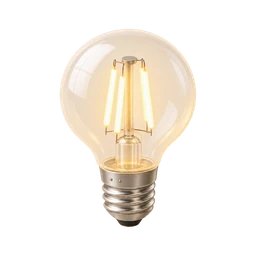
Did I turn off the lights?
Updated November 3, 2026
Lights are the lowest-stakes item on most leaving-the-house lists, and somehow they still nag. Maybe it's the bill, maybe it's the idea of the house glowing all day for no one. Either way, you're on the bus picturing the hallway lamp.
Here's what to do about it now, and how to set up your exit so the question stops coming up.
Why you can’t remember
Your hand finds a light switch in the dark without any help from you. That's useful, and it's also why you can't remember doing it. Actions that need no attention leave a faint trace, and by the time you're at the front door the trace is gone.
Lights also suffer from sheer repetition. You switch them on and off dozens of times a day. Ask yourself whether the bathroom light is off and your memory serves up a dozen nearly identical moments with no clear label saying which one was the last. That confusion between similar memories is normal and has nothing to do with how sharp you are.
Daylight makes it worse. At 8 a.m. with the sun coming in, a lamp that's on looks almost the same as one that's off, so even a glance back on your way out tells you little. And if you go back inside to check, then check again, studies on repeated checking show your confidence drops each time even though nothing has changed.
How to check right now
- Open your smart bulb or plug app
If any lights run through a smart bulb, switch or plug, the app shows their state and lets you turn them off from anywhere.
- Ask a neighbor to glance at the windows
In the evening, a lit window is easy to spot from the street. A quick text to a neighbor gets you an answer without anyone going inside.
- Weigh the cost
A modern LED bulb left on for ten hours uses about a tenth of a kilowatt-hour, a cent or two in most places. An old incandescent or halogen costs more but still isn't worth a trip back.
- Rule out the real hazards
Lights themselves are low risk. If the worry is a halogen work lamp, a heat lamp or a lamp with a damaged cord near fabric, treat that as a separate question and ask someone to check.
How to stop rechecking
- Do one walk-through, in the same order
Start at the farthest room and work toward the door, switching off as you go. A fixed route is easier to remember than random trips.
- Look at the bulb, not the switch
Switches can be ambiguous, especially dimmers and three-way setups. Look at the fixture for a second as it goes dark.
- Put routine lights on timers
A cheap plug-in timer or a smart bulb schedule turns off the lamps you always forget. Fewer things to check means fewer things to doubt.
- Use a master switch where you can
Some homes have a switch by the door that controls several circuits. If yours doesn't, a smart plug group can do the same job.
- Tap a Loop at the door
In One Loop, a custom Lights Loop takes one intentional tap after your walk-through. Later, the app shows the time you closed it, which is usually all you need to stop wondering.
Questions people ask
Is it dangerous to leave a light on all day?
For standard LED bulbs in working fixtures, no. Older halogen lamps run hot, so keep them away from curtains and paper and switch them off when you leave.
How much does it cost to leave a light on?
An LED bulb uses roughly 8 to 10 watts, so a full day costs a few cents in most places. Incandescent bulbs use several times more.
Should I leave a light on when I go on vacation?
Many people use timers so lights come on in the evening and go off at night, which looks more natural than one lamp burning nonstop. A light left on 24 hours a day can signal an empty house.
Why can I never remember switching off the lights?
The action takes no attention, so it leaves almost no memory, and today's switch-off blends with hundreds of others. Doing it slowly and looking at the light as it goes off helps.
Other things people double-check
Checklists that include this

Confirm it once. Stop wondering.
One Loop keeps a timestamped tap, voice note or photo of the things you do on autopilot. Free to try for 7 days.
Download on the App Store