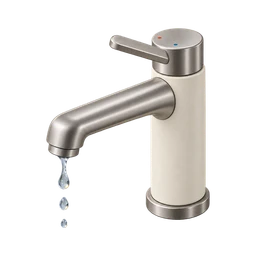
Did I turn off the faucet?
Updated November 3, 2026
You're halfway down the street and a picture pops into your head: the bathroom tap, still running, water creeping toward the edge of the sink. You washed your face, brushed your teeth, grabbed your bag. Somewhere in there your hand turned the handle. Probably.
A dripping or running faucet is rarely an emergency, but a blocked drain or a plug left in can turn it into one. The good news is that the doubt has a clear cause, and a few small changes at the sink make it go away.
Why you can’t remember
Turning off a tap is one of the most automatic movements you make all day. Your hand does it while your mind is already on the next thing: the towel, the time, whether you packed your lunch. Because you weren't paying attention, your brain stored almost nothing about the moment.
Then there's the overlap problem. You've turned that same handle thousands of times. When you try to recall this morning, you pull up a blend of every morning, and you can't tell whether the image in your head is from today or last Thursday. Psychologists call this a source-monitoring error: the memory exists, but its date stamp is missing.
Faucets add their own twist. A single-lever mixer looks almost the same slightly open as fully closed, and the sound of running water often stops registering after a few seconds. If you go back and stare at it, you'll feel better for a moment, but research on repeated checking (van den Hout and Kindt, 2003) found that the more people check, the less sure they feel about what they saw. Checking a second and third time tends to make the doubt worse.
How to check right now
- Ask someone who's home
A roommate, partner or neighbor with a key can look in ten seconds. Ask them to check every tap you used, including the kitchen and any outdoor hose.
- Look at your water meter app
Some utilities and smart meters show near-real-time usage. Steady flow while nobody's home points to a running tap or a toilet that won't stop filling.
- Think about the plug and the drain
If the sink plug was out and the drain is clear, a running tap wastes water but won't overflow. That makes it a cost to deal with when you get home, not a reason to turn the car around.
- Replay the last thing you did at the sink
Recall the specific action after the water: drying your hands, reaching for the light switch, picking up your phone. If you can place a concrete step after the tap, the shutoff most likely happened before it.
How to stop rechecking
- Say it while your hand is on the handle
Speaking forces your attention onto the action for a second, which is enough to make it memorable. "Kitchen tap off" sounds silly and works well.
- Touch the spout
After you close the tap, tap the dry spout with a finger. The extra physical step separates today's shutoff from all the others.
- Keep the plug out by default
Store the sink plug somewhere other than the drain. If a tap ever does get left on, the water goes down the pipe instead of over the edge.
- Fix the drip
A faucet that drips even when closed trains you to doubt it. A new cartridge or washer is a cheap fix and gives you a tap that is either on or off.
- Close a Loop in One Loop
One Loop has a Faucet preset. Snap a quick photo of the closed tap before you leave and the app saves it with the time, so on the street you open the photo instead of wondering.
Questions people ask
What happens if I leave the faucet running all day?
With the plug out and a clear drain, you'll mostly waste water and pay for it. With a plug in or a slow drain, the sink can overflow and damage floors or ceilings below.
Why do I always worry I left the water on?
Turning off a tap is so automatic that your brain barely records it, and today's memory blends with every other day's. Doubt about routine actions like this is common.
How much water does a running faucet use?
A typical bathroom faucet runs at roughly 1 to 2 gallons per minute, so a few hours can add up to hundreds of gallons. Check your fixture or water bill for exact figures.
Should I turn off the main water valve when I travel?
Many people do for longer trips, since it protects against burst hoses and leaks as well as forgotten taps. Know where your main valve is and how to turn it before you need it.
Other things people double-check
Checklists that include this

Confirm it once. Stop wondering.
One Loop keeps a timestamped tap, voice note or photo of the things you do on autopilot. Free to try for 7 days.
Download on the App Store