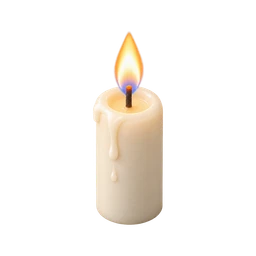
Did I blow out the candles?
Updated November 3, 2026
Candles are supposed to fade into the background. That's their appeal: a soft light, a nice smell, something you stop noticing after a few minutes. Which is exactly why, an hour after you've left or just as you're falling asleep, you can't remember whether the one on the bookshelf is still burning.
With open flame, this is a doubt worth acting on. Candles are also one of the easiest things to build a reliable habit around.
Why you can’t remember
Once a candle is lit, your brain treats it as part of the scenery. You get used to the light and the scent within minutes. When you leave the room, nothing about the candle demands attention, so it's easy to walk away from one still burning or to blow it out without noticing you did.
Several candles make it harder. You might clearly remember blowing out the one on the coffee table and assume you got the one in the bathroom too. Small tealights and jar candles burn low and can be almost invisible from a doorway, especially in daylight.
Blowing out a candle is also quick and repetitive. If you light candles most evenings, those memories merge, and a recollection from last night can feel like tonight's. When you go back to check repeatedly, each extra look feeds the doubt instead of settling it.
How to check right now
- Ask someone at home to check every room
Name the candles you lit and where they are. Ask them to snuff each one, not just look from the doorway.
- Count the candles you lit
Try to list them by room. If you can remember putting out each one individually, that's more reliable than a general sense of having blown out "the candles."
- Check a camera
If an indoor camera covers the room, the footage may show whether the candle is still lit.
- Go back if nobody can confirm
An unattended flame near curtains, books or a pet is a real danger. If you can't check another way, return once and put it out.
Safety note. Never leave a burning candle unattended or go to sleep with one lit. Keep candles away from anything that can catch fire, out of reach of children and pets, and on a stable, heat-resistant surface. If you can't confirm a candle is out and nobody can check, go back.
How to stop rechecking
- Use a snuffer and say it
A snuffer makes putting out a candle a slower, more deliberate act. Pair it with "candle out" said out loud, and the moment is much easier to remember.
- Keep candles in one place
Grouping candles on one tray or shelf means you have one spot to check, so none get missed in another room.
- Make it the first step of leaving a room
Before you switch off lights or leave for bed, put out every candle. Tying it to the lights gives it a clear cue.
- Try flameless candles
LED candles with a flicker effect look surprisingly real, and many have timers. They're a sensible swap for rooms where you tend to forget, like the bathroom or bedroom.
- Close a Loop when they're out
One Loop has a Candle preset. A quick photo of the snuffed candles, or a voice note naming each one, gives you a timestamped record to check when you're already in bed.
Questions people ask
How long can a candle burn unattended?
It shouldn't. Fire safety organizations advise never leaving a burning candle unattended, even for a short time.
Will a candle go out on its own?
Eventually, when the wax or wick runs out, but that can take hours. In the meantime, a draft, a pet or nearby fabric can turn it into a fire.
Is it better to blow out a candle or snuff it?
Snuffing creates less smoke and avoids splattering hot wax. It's also slower and more deliberate, which helps you remember doing it.
Why can't I remember blowing out the candle?
A lit candle quickly becomes part of the background, and blowing it out takes a second. With little attention involved, there's not much memory to recall.
Other things people double-check
Checklists that include this

Confirm it once. Stop wondering.
One Loop keeps a timestamped tap, voice note or photo of the things you do on autopilot. Free to try for 7 days.
Download on the App Store